
Aluminum Cosmetic Tubes: Barrier Benefits, Linings and Formula Compatibility
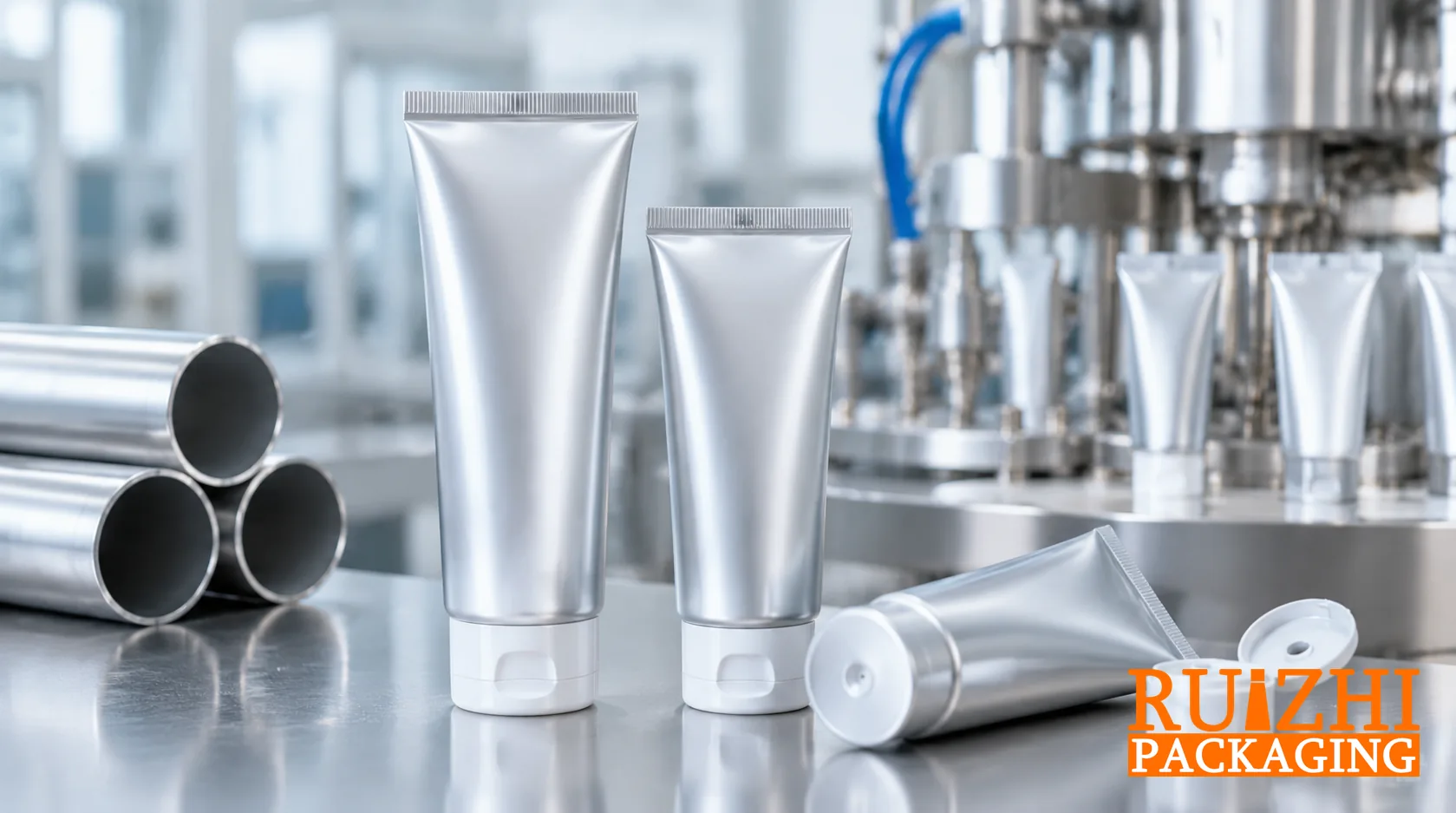
Aluminum cosmetic tubes offer a distinctive, permanently deformable format and can provide strong barrier characteristics when correctly designed. They are not a universal replacement for plastic tubes. The body, internal lacquer, shoulder, orifice and closure must match the formula and production process. Buyers should understand the complete construction and intended disposal route before treating metallic appearance as proof of technical or environmental advantage.
Confirm why aluminum is being considered
Define whether the priority is barrier, light protection, tactile experience or brand differentiation. Compare those needs with the formula's actual stability risks. If the pack is chosen for oxygen or moisture control, ask what evidence describes the finished assembly, including seams and closure. A material's general properties do not establish a particular package's performance.
Review the internal coating
Many applications depend on an internal lacquer separating formula from metal. Request coating identification and assess coverage, continuity and compatibility. Oils, acids, salts and other ingredients may interact differently with a lining. The formulator should evaluate the final product and relevant storage conditions. Never infer that every aluminum tube is unlined or that every coating suits every formula.
Understand permanent deformation
Unlike a resilient plastic body, a collapsible aluminum tube may retain folds as product is dispensed. This can help indicate use but also changes appearance and handling. Evaluate whether customers can control dose without sharp creasing or accidental damage. Establish instructions that match the actual construction; repeatedly rolling a tube with an accessory is different from simply squeezing it.
Coordinate outlet and closure design
The tail seal, shoulder and cap must maintain product protection throughout use. Confirm filling direction and whether the opening requires a membrane or other seal. Test the cap after repeated opening, with residue present and after transport. Evaluate whether the chosen outlet remains usable as the tube deforms.
- Review lacquer exposure around the orifice and shoulder.
- Inspect tail seals using an agreed integrity method.
- Assess damage from drops and compression in shipping.
- Confirm the customer can close the tube without cross-threading.
Plan decoration and coding
Aluminum may use printing, coatings or labels that respond differently to squeezing and folding. Assess adhesion and cracking after realistic use. Reserve space for batch coding and required information. Appearance approvals should include filled or realistically deformed specimens, since a pristine empty tube does not represent the surface at the end of use.
Consider recycling accurately
Aluminum is recyclable in many systems, but a specific tube's acceptance depends on local collection, size, residue and processing. Coatings and closures also influence the complete pack. Avoid saying infinitely recyclable as a guarantee for every consumer pathway. Provide market-appropriate guidance and substantiate environmental comparisons using transparent boundaries.
Qualify the filling line
Confirm tube presentation, fill mass, product temperature and sealing settings with the actual equipment. A contaminated tail or overheated seal can create failures unrelated to the metal barrier itself. Run production-representative samples, document settings and check initial and steady-state output. This avoids approving a hand-filled prototype that cannot be reproduced efficiently.
Procurement review: turn the technical choice into a controlled order
For aluminum cosmetic tubes, procurement should ask for a written specification rather than approve a photograph or a material name. Identify the finished formula reference, component drawing revisions, decoration standard and intended filling route. Classify requirements by their consequences: a cosmetic shade difference, a dispensing inconsistency and a leak require different investigation methods. Have the brand, packaging supplier and filling partner agree which characteristics are critical before requesting a commercial production release.
Sample evidence and acceptance limits
Select production-representative samples, including the intended resin, finish, assembly and decoration. Record component lot numbers and the conditions used for evaluation. A development sample made by a different process can answer an appearance question while leaving the manufacturing question unresolved. Ask the supplier to explain those differences explicitly. Retain signed samples as references, but support them with dimensions and measurable requirements because a physical reference alone cannot describe all functional limits.
Build the test plan around the failure modes described in this article. State sample conditioning, orientations, observation periods and acceptance rules before testing begins. Where measurements are necessary, specify the equipment and method. Results from different laboratories are difficult to compare when methods differ. A report saying only pass should prompt a request for underlying observations. Batch inspection sampling also serves a different purpose from compatibility or shelf-life work; one cannot replace the other simply because all use samples.
Quotation, pilot and change control
Compare quotations on total usable packs delivered to the filling location. Separate tooling, decoration setup, component costs, assembly, protective packing and transport assumptions. Clarify minimum quantities at component and color level, not just the total order. Include development samples, filling trials and expected start-up consumption in the purchasing plan. A cheaper pack can cost more overall if it requires extensive sorting, frequent line adjustment or avoidable disposal of filled rejects.
Run a pilot with the actual bulk and intended filling equipment before scaling up. Record interruptions, adjustments and reject causes. Resolve the findings with the supplier, then issue an approved production specification. Establish who owns tooling, how it is maintained and how artwork versions are controlled. Require notification when materials, finishes, factories or component sub-suppliers change. Even a visually similar substitute can affect performance, so approval of one version should not silently authorize every later variation.
Questions to settle before the purchase order
- Which production samples demonstrate the risks discussed here have been evaluated?
- What specification will the supplier and filler use for release?
- Which changes require written approval before shipment?
- Who investigates an assembled or filled-pack failure, and what evidence is retained?
These questions make a sourcing comparison more useful without assuming every supplier offers every construction. Confirm options for the specific design and order. Keep material descriptions, recycling claims and market requirements separate: a material may be available yet unsuitable for the formula, and technical suitability does not automatically substantiate a sustainability claim. Use the resulting evidence to choose a pack for its actual job, then preserve that evidence for repeat orders and future reformulations.
Explore related packaging
Compare the related collection , browse all packaging designs , review our OEM/ODM process , or send a project brief . Confirm the availability and specification of each option with our team before ordering.