
Dual-Ended Cosmetic Tubes: Engineering Two Formulas into One Reliable Pack
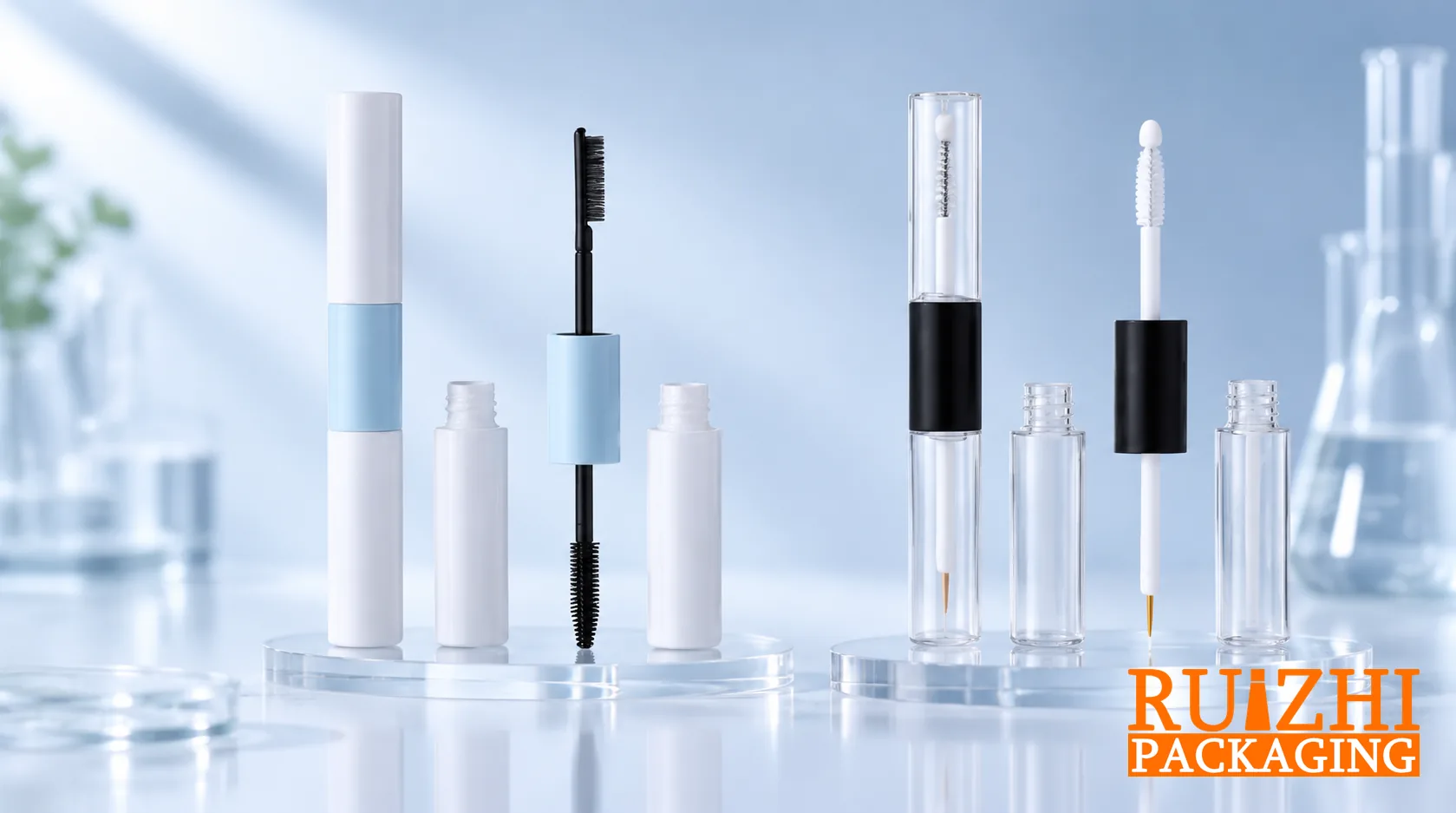
Dual-ended tubes let a brand combine complementary formulas or applicators in one portable package. Examples include coordinated lip products and paired eye makeup routines. The commercial appeal is clear, but two ends create additional interfaces, filling steps and user decisions. A successful dual-ended pack must be approved as a complete assembly rather than two independent containers connected by an attractive center section.
Define the routine and consumption balance
Specify what each chamber contains and how often customers use it. Equal exterior halves do not necessarily need equal usable capacities. If one formula runs out much sooner, the customer may discard the remaining product or keep an awkward partial pack. Estimate realistic consumption and discuss whether chamber dimensions or refill concepts can address the imbalance.
Label each end unambiguously
Users should recognize which end contains which product without reading tiny text repeatedly. Consider color, typography and tactile distinction while maintaining brand consistency. Observe customers opening the pack naturally. A center connection that resembles an opening can create confusion and unnecessary mechanical stress.
Confirm isolation and material compatibility
Each formula needs compatibility work with its own contact parts. Review whether a central component, adhesive or shared structural section creates a plausible migration or leakage path. Claims that two chambers are separate should be supported by the actual construction and relevant tests, not just an exterior rendering.
Different formulas may require different wipers, rods or valves. A shared appearance does not justify identical internal parts. Evaluate dose, pickup and closure independently at each end, then repeat critical checks on the assembled double-ended product because joining and handling can change alignment or loads.
Evaluate the central connection
The connector experiences twisting and bending as customers open caps and carry the pack. Define how it is joined and whether it is intended to separate. Check that opening one end does not loosen another joint. Review assembly orientation so printed graphics, applicators and end labels align as intended.
- Verify each chamber's usable fill and headspace.
- Inspect connector retention and resistance to unintended rotation.
- Check leakage in both horizontal orientations.
- Assess cap identification during a normal routine.
Plan filling and traceability for two bulks
The filler must manage two formulas, two fill quantities and the correct component pairing. Establish assembly sequence and controls against swapped ends. Record batch identification so a complaint can be traced to both bulks and all critical components. Consider how coding remains readable without turning the center area into a cluttered collection of markings.
Transport the assembled shape, not isolated halves
A long double-ended assembly can need different protective packing from short single products. Test bending, impact and vibration in the final shipping configuration. A carton that supports only the ends may load the center joint differently from a close-fitting insert. Include the retail box if it is part of the intended protection strategy.
Align sourcing with the product story
Ask whether component minimums are shared or separate for each end and whether decoration requires multiple setups. A two-in-one concept does not necessarily halve material use or cost. Compare actual mass, product utilization and customer convenience before making environmental or economic claims. The strongest brief connects an understandable routine with a mechanically reliable and operationally traceable pack.
Procurement review: turn the technical choice into a controlled order
For dual-ended cosmetic tube assemblies, procurement should ask for a written specification rather than approve a photograph or a material name. Identify the finished formula reference, component drawing revisions, decoration standard and intended filling route. Classify requirements by their consequences: a cosmetic shade difference, a dispensing inconsistency and a leak require different investigation methods. Have the brand, packaging supplier and filling partner agree which characteristics are critical before requesting a commercial production release.
Sample evidence and acceptance limits
Select production-representative samples, including the intended resin, finish, assembly and decoration. Record component lot numbers and the conditions used for evaluation. A development sample made by a different process can answer an appearance question while leaving the manufacturing question unresolved. Ask the supplier to explain those differences explicitly. Retain signed samples as references, but support them with dimensions and measurable requirements because a physical reference alone cannot describe all functional limits.
Build the test plan around the failure modes described in this article. State sample conditioning, orientations, observation periods and acceptance rules before testing begins. Where measurements are necessary, specify the equipment and method. Results from different laboratories are difficult to compare when methods differ. A report saying only pass should prompt a request for underlying observations. Batch inspection sampling also serves a different purpose from compatibility or shelf-life work; one cannot replace the other simply because all use samples.
Quotation, pilot and change control
Compare quotations on total usable packs delivered to the filling location. Separate tooling, decoration setup, component costs, assembly, protective packing and transport assumptions. Clarify minimum quantities at component and color level, not just the total order. Include development samples, filling trials and expected start-up consumption in the purchasing plan. A cheaper pack can cost more overall if it requires extensive sorting, frequent line adjustment or avoidable disposal of filled rejects.
Run a pilot with the actual bulk and intended filling equipment before scaling up. Record interruptions, adjustments and reject causes. Resolve the findings with the supplier, then issue an approved production specification. Establish who owns tooling, how it is maintained and how artwork versions are controlled. Require notification when materials, finishes, factories or component sub-suppliers change. Even a visually similar substitute can affect performance, so approval of one version should not silently authorize every later variation.
Questions to settle before the purchase order
- Which production samples demonstrate the risks discussed here have been evaluated?
- What specification will the supplier and filler use for release?
- Which changes require written approval before shipment?
- Who investigates an assembled or filled-pack failure, and what evidence is retained?
These questions make a sourcing comparison more useful without assuming every supplier offers every construction. Confirm options for the specific design and order. Keep material descriptions, recycling claims and market requirements separate: a material may be available yet unsuitable for the formula, and technical suitability does not automatically substantiate a sustainability claim. Use the resulting evidence to choose a pack for its actual job, then preserve that evidence for repeat orders and future reformulations.
Explore related packaging
Compare the related collection , browse all packaging designs , review our OEM/ODM process , or send a project brief . Confirm the availability and specification of each option with our team before ordering.