
Lipstick Cases and Twist-Up Stick Packaging: Mechanism, Tolerance and Compatibility
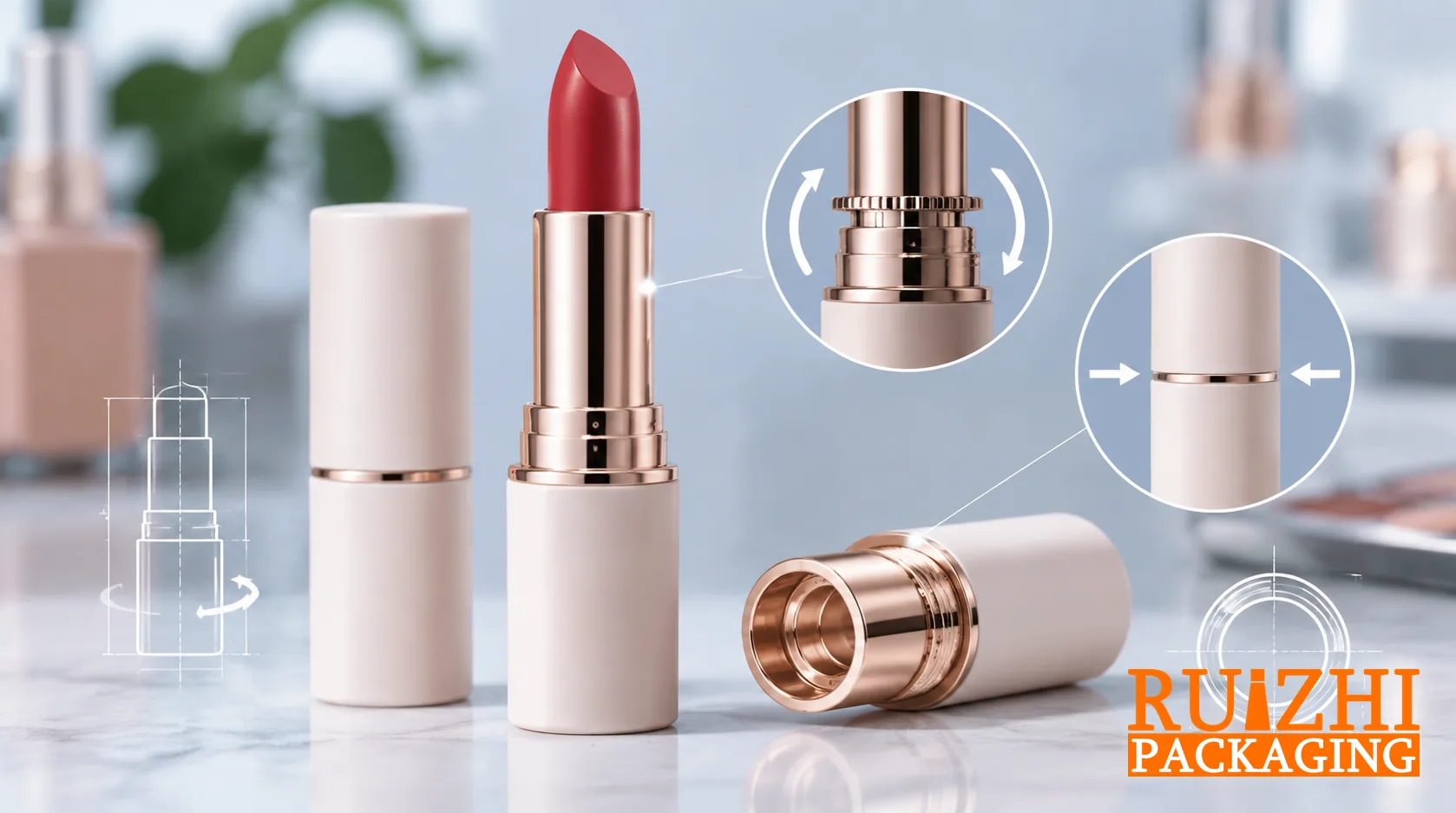
Lipstick cases and twist-up stick packaging need to protect a molded product while delivering smooth, predictable movement. The case can have a round, square or custom exterior, but the internal cup and mechanism determine whether the lipstick rises cleanly and stays in place. A beautiful shell cannot correct a loose cup, excessive twist force or a cap that falls off in a handbag.
Identify the mechanism and cup requirements
Confirm cup diameter, product dimensions, travel distance and intended overrun. These details depend on the formula and filling process. A soft balm may deform under pressure, while a firm lipstick can reveal a different fit or breakage issue. Test the actual formula at relevant temperatures rather than using a generic solid rod.
Measure twist behavior over the full travel
Check torque or operating force from initial movement through full extension and retraction. Inspect for wobble, scraping or sudden jumps. Evaluate repeated cycles and determine whether the product can retract without contacting the cap. Define how much twist variation is acceptable across samples.
Protect cap retention and product surface
A cap must remain secure during transport but be removable without damaging the lipstick. Friction, magnets or other retention features need testing on assembled parts. Inspect cap fit after repeated use and after drops. Confirm that the product surface has adequate clearance and is not marked by internal features.
- Review cup retention and alignment.
- Test opening and closing force across samples.
- Inspect mechanism at full extension and retraction.
- Check for cap contact with the product tip.
Compare exterior formats pragmatically
Round cases can be comfortable to hold and straightforward to label. Square or rounded-square silhouettes may improve shelf blocking but introduce corner and orientation considerations. Confirm that the chosen shape can be decorated consistently and packed efficiently. A distinctive exterior can affect tooling, assembly and minimum quantities, which belong in the commercial comparison.
Evaluate materials and decoration together
ABS, PP and other proposed materials have different process and finish possibilities. Confirm the actual grade and component combination. Metallic bands, soft-touch coatings and printed patterns should be tested for wear, adhesion and formula contact. A color approved on a flat swatch may look different on a curved or faceted case.
Coordinate package, filling and quality checks
Clarify who supplies the mechanism, assembles the cup and performs final functional inspection. Align filling temperature and insertion steps with the packaging components. Measure finished height and clearances after filling. Pilot output can reveal assembly problems that prototype parts do not show, including inconsistent cup positioning or debris in the mechanism.
Build the approval around a real user sequence
Observe opening, twisting, application, retraction and recapping. Include one-handed operation where it is part of the use case. Define a controlled sample and keep mechanism, shell and decoration versions together. This allows a brand to preserve the tactile experience while making case development and repeat procurement more predictable.
A development detail worth checking
Include warm and cool handling observations for stick formulas where those conditions are relevant. A softened product can adhere to an interior wall or shift in its cup, while a firmer stick may transmit higher loads to the mechanism. Let the formula team interpret these findings and avoid adjusting the cup fit solely on the basis of one room-temperature demonstration. ## Procurement review: turn the technical choice into a controlled order
For lipstick cases and twist-up stick packaging, procurement should ask for a written specification rather than approve a photograph or a material name. Identify the finished formula reference, component drawing revisions, decoration standard and intended filling route. Classify requirements by their consequences: a cosmetic shade difference, a dispensing inconsistency and a leak require different investigation methods. Have the brand, packaging supplier and filling partner agree which characteristics are critical before requesting a commercial production release.
Sample evidence and acceptance limits
Select production-representative samples, including the intended resin, finish, assembly and decoration. Record component lot numbers and the conditions used for evaluation. A development sample made by a different process can answer an appearance question while leaving the manufacturing question unresolved. Ask the supplier to explain those differences explicitly. Retain signed samples as references, but support them with dimensions and measurable requirements because a physical reference alone cannot describe all functional limits.
Build the test plan around the failure modes described in this article. State sample conditioning, orientations, observation periods and acceptance rules before testing begins. Where measurements are necessary, specify the equipment and method. Results from different laboratories are difficult to compare when methods differ. A report saying only pass should prompt a request for underlying observations. Batch inspection sampling also serves a different purpose from compatibility or shelf-life work; one cannot replace the other simply because all use samples.
Quotation, pilot and change control
Compare quotations on total usable packs delivered to the filling location. Separate tooling, decoration setup, component costs, assembly, protective packing and transport assumptions. Clarify minimum quantities at component and color level, not just the total order. Include development samples, filling trials and expected start-up consumption in the purchasing plan. A cheaper pack can cost more overall if it requires extensive sorting, frequent line adjustment or avoidable disposal of filled rejects.
Run a pilot with the actual bulk and intended filling equipment before scaling up. Record interruptions, adjustments and reject causes. Resolve the findings with the supplier, then issue an approved production specification. Establish who owns tooling, how it is maintained and how artwork versions are controlled. Require notification when materials, finishes, factories or component sub-suppliers change. Even a visually similar substitute can affect performance, so approval of one version should not silently authorize every later variation.
Questions to settle before the purchase order
- Which production samples demonstrate the risks discussed here have been evaluated?
- What specification will the supplier and filler use for release?
- Which changes require written approval before shipment?
- Who investigates an assembled or filled-pack failure, and what evidence is retained?
These questions make a sourcing comparison more useful without assuming every supplier offers every construction. Confirm options for the specific design and order. Keep material descriptions, recycling claims and market requirements separate: a material may be available yet unsuitable for the formula, and technical suitability does not automatically substantiate a sustainability claim. Use the resulting evidence to choose a pack for its actual job, then preserve that evidence for repeat orders and future reformulations.
Explore related packaging
Compare the related collection , browse all packaging designs , review our OEM/ODM process , or send a project brief . Confirm the availability and specification of each option with our team before ordering.