
Sustainable Skincare Packaging Solutions: An Evidence-Based Design Roadmap
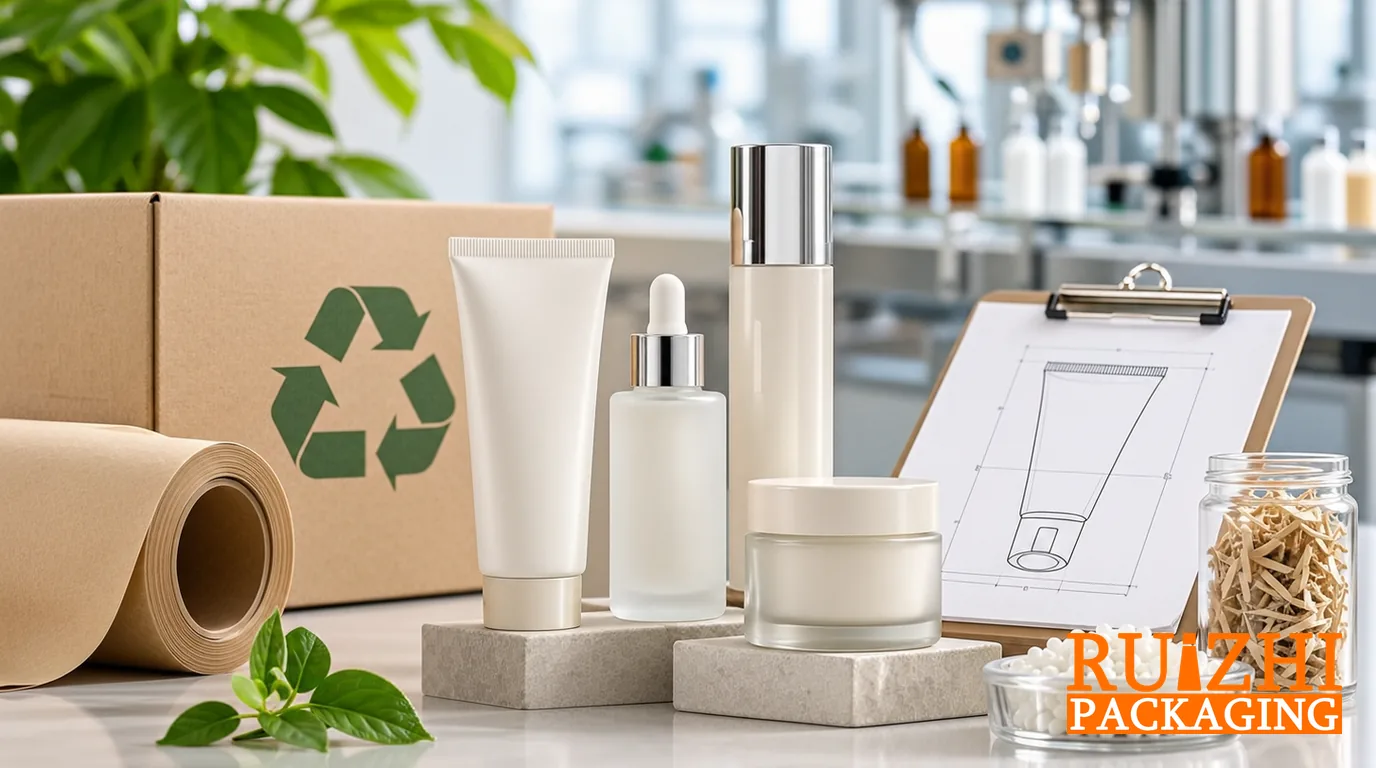
Sustainable skincare packaging is a design and supply-chain question rather than a single preferred material. Product loss, packaging mass, manufacturing, transport and disposal all influence the result. Brands need a clear objective and transparent evidence to compare options. A lighter tube, recycled resin, refill system or paper outer box may address different goals, and none automatically solves every environmental concern.
Establish the objective and comparison boundary
Decide whether the project targets virgin fossil inputs, total material, shipping mass, waste prevention or another measurable outcome. Compare alternatives delivering the same amount of usable product. State what is included: primary container, closure, pump, outer carton and transport protection. A favorable result for one component may not describe the complete system.
Protect product first
A package that causes leakage or poor evacuation can waste formula and the resources invested in it. Maintain compatibility, barrier and dose requirements while reducing materials. Test changes with the final product and intended distribution. Lightweighting should be a controlled engineering activity, not simply a request for thinner walls.
Compare material strategies separately
PCR content supports demand for recovered material, while bio-based feedstock changes resource origin. Mono-material design may simplify some processing pathways, but actual collection and sorting remain market-specific. Paper and aluminum can be appropriate for some jobs, yet their coatings, liners and closures matter. Define each claim and avoid merging distinct attributes into an unsupported eco-friendly label.
- Record complete component masses and materials.
- Compare delivered usable product, not only empty packs.
- Check local collection and processing guidance.
- Preserve the evidence supporting every public claim.
Evaluate refill as a system
Refill needs a durable primary pack, available replacements, practical cleaning or replacement instructions and a realistic customer routine. Assess how many cycles occur and what materials each cycle adds. A refillable shape without an accessible refill offer does not provide the same system benefit. Test performance after repeated use and define which parts are replaced.
Use life-cycle information carefully
A life-cycle study can support comparison when its assumptions and boundaries are transparent. Review reference cases, allocation, energy and end-of-life scenarios. Do not transfer a result from a generic material comparison directly to a specific product launch. If evidence is incomplete, communicate a narrower factual improvement rather than a broad impact claim.
Align sourcing and marketing controls
Sustainability claims may rely on a particular material source, component weight or certification scope. Require notification when those change. Provide marketing with approved wording and limitations. Obtain current destination-market review for environmental statements instead of assuming a phrase accepted elsewhere is universally suitable.
Create a practical roadmap
Begin with measurable changes that preserve product performance, then use pilots to evaluate more ambitious redesigns. Track defects, evacuation and customer adoption as well as material metrics. A useful roadmap makes trade-offs visible and allows the brand to improve on evidence. This is more credible and commercially durable than choosing a fashionable material and searching for a claim afterward.
A development detail worth checking
Choose metrics the team can maintain after launch. Track packaging mass per usable fill, damage, returns and refill participation where applicable. Define who updates the data and how often decisions are reviewed. A roadmap becomes more useful when customer behavior and manufacturing results can challenge its assumptions rather than serving only as a record of the design team's original intention. ## Procurement review: turn the technical choice into a controlled order
For sustainable skincare packaging solutions, procurement should ask for a written specification rather than approve a photograph or a material name. Identify the finished formula reference, component drawing revisions, decoration standard and intended filling route. Classify requirements by their consequences: a cosmetic shade difference, a dispensing inconsistency and a leak require different investigation methods. Have the brand, packaging supplier and filling partner agree which characteristics are critical before requesting a commercial production release.
Sample evidence and acceptance limits
Select production-representative samples, including the intended resin, finish, assembly and decoration. Record component lot numbers and the conditions used for evaluation. A development sample made by a different process can answer an appearance question while leaving the manufacturing question unresolved. Ask the supplier to explain those differences explicitly. Retain signed samples as references, but support them with dimensions and measurable requirements because a physical reference alone cannot describe all functional limits.
Build the test plan around the failure modes described in this article. State sample conditioning, orientations, observation periods and acceptance rules before testing begins. Where measurements are necessary, specify the equipment and method. Results from different laboratories are difficult to compare when methods differ. A report saying only pass should prompt a request for underlying observations. Batch inspection sampling also serves a different purpose from compatibility or shelf-life work; one cannot replace the other simply because all use samples.
Quotation, pilot and change control
Compare quotations on total usable packs delivered to the filling location. Separate tooling, decoration setup, component costs, assembly, protective packing and transport assumptions. Clarify minimum quantities at component and color level, not just the total order. Include development samples, filling trials and expected start-up consumption in the purchasing plan. A cheaper pack can cost more overall if it requires extensive sorting, frequent line adjustment or avoidable disposal of filled rejects.
Run a pilot with the actual bulk and intended filling equipment before scaling up. Record interruptions, adjustments and reject causes. Resolve the findings with the supplier, then issue an approved production specification. Establish who owns tooling, how it is maintained and how artwork versions are controlled. Require notification when materials, finishes, factories or component sub-suppliers change. Even a visually similar substitute can affect performance, so approval of one version should not silently authorize every later variation.
Questions to settle before the purchase order
- Which production samples demonstrate the risks discussed here have been evaluated?
- What specification will the supplier and filler use for release?
- Which changes require written approval before shipment?
- Who investigates an assembled or filled-pack failure, and what evidence is retained?
These questions make a sourcing comparison more useful without assuming every supplier offers every construction. Confirm options for the specific design and order. Keep material descriptions, recycling claims and market requirements separate: a material may be available yet unsuitable for the formula, and technical suitability does not automatically substantiate a sustainability claim. Use the resulting evidence to choose a pack for its actual job, then preserve that evidence for repeat orders and future reformulations.
Explore related packaging
Compare the related collection , browse all packaging designs , review our OEM/ODM process , or send a project brief . Confirm the availability and specification of each option with our team before ordering.